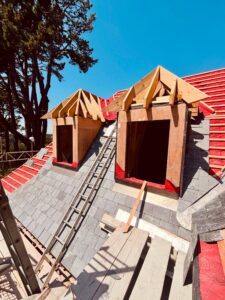
Choosing between tile vs slate roofing in Dorset is an important decision when installing or replacing a pitched roof. Both materials can provide dependable protection, attractive kerb appeal and excellent long-term performance when they are correctly specified and professionally installed.
However, tiles and slates differ in appearance, weight, maintenance requirements, price and suitability for different properties. The right choice will depend on the roof structure, the style of the building, the surrounding area and your available budget.
This guide explains the main differences to help you make a more informed decision for your Dorset property.
What Is Tile Roofing?
Roof tiles are individual overlapping units installed on battens across a pitched roof. They are commonly manufactured from clay or concrete and are available in a wide variety of profiles, colours and finishes.
Clay tiles are often chosen for their traditional appearance. Depending on the profile, they can complement cottages, period properties and modern homes. Concrete tiles provide a broad selection of styles and can imitate the appearance of other roofing materials.
A correctly installed tiled roof directs rainwater down the roof slope and into the guttering system while protecting the roofing membrane and structure underneath.
What Is Slate Roofing?
Natural slate is a fine-grained stone that can be split into thin, durable roofing pieces. Slate has been used on British properties for generations and remains popular for its distinctive appearance.
Slate roofing is frequently found on traditional buildings, cottages, period homes and higher-quality new developments. Different slate sources can produce variations in colour, texture, thickness and character.
Artificial or fibre-cement slates are also available. These are manufactured roofing products designed to provide a more consistent appearance. However, they do not have exactly the same characteristics as natural slate.
Tile vs Slate Roofing Dorset: The Main Differences
Appearance
Slate generally creates a clean, refined roofline with a naturally varied finish. It is particularly suited to properties where retaining traditional architectural character is important.
Tiles offer greater variety in terms of colour, shape and profile. Options can range from traditional plain clay tiles to larger-format concrete products suited to modern developments.
The existing appearance of neighbouring properties may influence your decision, especially in conservation areas or locations where a particular roofing style is common.
Roof Weight
The weight placed on the roof structure varies between roofing products. Some concrete tiles can be considerably heavier than certain slate systems, although the exact weight depends on the chosen product and installation method.
Before changing from one covering to another, the roof structure should be assessed. Rafters, trusses and supporting walls must be capable of carrying the proposed material safely.
The Planning Portal’s re-roofing guidance explains that changing to a significantly heavier or lighter roof covering may require Building Regulations approval and possible structural modifications.
Durability
Both tiles and slates can provide reliable performance when they are suitable for the roof pitch, securely fixed and maintained properly.
Natural slate is known for its ability to remain serviceable for a long period. However, the lifespan of the overall roof also depends on the condition of the fixings, battens, underlay, flashings and supporting structure.
Clay and concrete tiles are also durable, but individual tiles may eventually crack, become dislodged or suffer surface deterioration. Damaged units can often be replaced without renewing the entire roof.
Maintenance and Repairs
Both roof types should be inspected following high winds or severe weather. Missing, cracked or slipped coverings can expose the membrane and roof structure to rainwater.
Common maintenance issues include:
- Cracked or broken tiles
- Slipped or missing slates
- Deteriorated roof fixings
- Loose ridge or hip tiles
- Damaged lead flashing
- Blocked gutters and roof valleys
- Moss or vegetation affecting drainage
Natural slate repairs require suitable replacement pieces and correct fixing techniques. Tiled roofs may be easier to match if the original product remains available, although discontinued colours and profiles can present difficulties.
Roof Pitch
Every roofing product has a minimum recommended pitch. Installing a tile or slate below its suitable pitch can increase the risk of wind-driven rain entering beneath the covering.
A roofing contractor should consider the roof angle, rafter length, local exposure and manufacturer’s installation instructions before recommending a material.
Cost
The total cost of a new roof depends on more than the price of the visible covering. Scaffolding, labour, battens, underlay, insulation, leadwork, waste removal and structural repairs can all affect the quotation.
Natural slate may have a higher initial material and installation cost than some concrete tile systems. However, homeowners should compare the expected performance, appearance and maintenance requirements rather than making a decision based only on the lowest initial price.
Which Material Is Better for Dorset’s Weather?
Dorset properties can experience heavy rain, strong winds and exposed coastal conditions. A suitable roof covering must therefore be installed with the correct laps, fixings and weatherproofing details.
Neither tile nor slate is automatically better for every Dorset property. Performance depends on factors such as:
- The property’s distance from the coast
- The height and exposure of the building
- The pitch and design of the roof
- The quality of the chosen product
- The type and number of fixings used
- The condition of the underlying roof structure
- The quality of the installation
Professional specification is particularly important for homes in exposed areas of Poole, Bournemouth, Christchurch and other coastal locations.
What About Listed Buildings and Conservation Areas?
If your home is listed or located in a conservation area, there may be restrictions on changing the roof covering. Local authorities may require the replacement material to match the existing slate or tile in colour, dimensions and appearance.
Homeowners should contact their local planning authority before making significant changes. It may be necessary to retain reusable original materials or choose a carefully matched replacement.
Should You Repair or Replace the Existing Roof?
A roof with a small number of damaged tiles or slates may only need targeted repairs. Complete replacement may be more appropriate if failures are widespread, the underlay has deteriorated or previous patch repairs are no longer effective.
A professional inspection can assess:
- The condition of the tiles or slates
- The remaining strength of the fixings
- The roof battens and underlay
- Structural movement or sagging
- Ventilation and insulation
- Chimney and abutment flashing
- Ridges, hips, verges and valleys
Professional Tile and Slate Roofing in Dorset
DB Roofing provides professional tile and slate roofing services for properties throughout Dorset. Our team can assess your existing roof and recommend a covering suited to its structure, design and location.
You can also explore our pitched roofing services in Dorset for new installations, replacements, maintenance and repairs.
Request a Free Roofing Quote
The final decision between tile vs slate roofing in Dorset should balance appearance, structural suitability, local exposure, maintenance and budget.
For professional advice, contact DB Roofing or call 01202 126602. Our experienced team covers Bournemouth, Poole, Christchurch, Wimborne, Ferndown and surrounding Dorset areas.