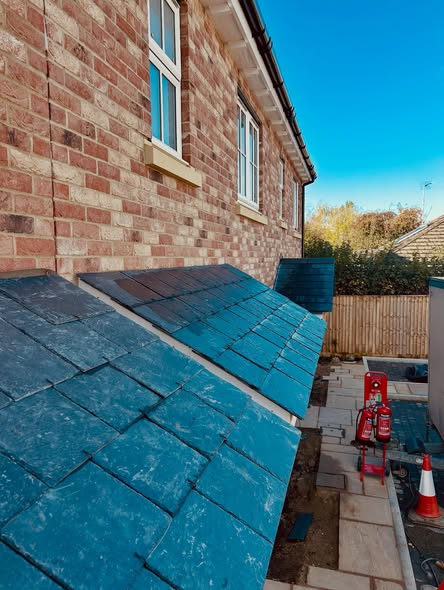
Professional roof valley repair in Dorset can protect a property from one of the most common sources of roof leaks. Roof valleys carry a significant amount of rainwater, especially during heavy or prolonged rainfall, making correct installation and regular maintenance essential.
If a valley becomes blocked, cracked or damaged, water may travel underneath the surrounding tiles or slates. This can lead to damp insulation, stained ceilings, damaged plaster and deterioration of the roof timbers.
Understanding how valleys work and recognising the signs of failure can help homeowners arrange repairs before the damage becomes more extensive.
What Is a Roof Valley?
A roof valley is the internal angle created where two sloping roof sections meet. Rather than shedding water from one roof surface, a valley collects rainwater from both sides and directs it towards the guttering system.
Valleys are commonly found on:
- L-shaped and T-shaped properties
- Home extensions
- Dormer roofs
- Porches and entrance roofs
- Properties with multiple pitched sections
- Complex residential and commercial roofs
Because valleys manage concentrated water flow, even a relatively small defect can allow a considerable amount of moisture into the roof.
Different Types of Roof Valley
The type of valley installed will depend on the roof design, covering and age of the property.
Lead-Lined Valleys
Lead is traditionally used to form a durable, flexible channel between two roof slopes. The lead sections must be correctly sized and installed to allow natural expansion and contraction.
GRP Valley Troughs
Glass-reinforced plastic valley troughs are manufactured components designed to sit beneath the edges of roof tiles or slates. Correct positioning, support and overlap are essential for reliable performance.
Tiled or Closed Valleys
Some roofs use specially cut or interlocking coverings to form a more concealed valley. These systems require careful installation to maintain the correct drainage channel.
Regardless of the valley type, it must have a clear route to the gutter and sufficient capacity for water running from the surrounding roof slopes.
Common Causes of a Leaking Roof Valley
Leaves, Moss and Debris
Valleys can collect leaves, moss, twigs and other debris. A blockage may slow the water flow and cause it to spread sideways beneath the roof covering.
Debris can also retain moisture against roofing materials, increasing the risk of deterioration over time.
Cracked or Split Valley Linings
Lead, mortar and manufactured valley components can deteriorate or become damaged. Splits and cracks may allow water to enter directly beneath the roof covering.
Slipped Tiles or Slates
Tiles and slates bordering the valley must remain securely fixed. A slipped or broken covering can expose the edge of the valley and create a route for rainwater.
Poor Installation
Incorrect overlaps, insufficient support, unsuitable fixings or a valley that is too narrow for the roof can contribute to leaks. Water may also overshoot the gutter if the lower end has not been detailed correctly.
Failed Mortar
Older valleys sometimes rely on mortar to secure the cut edges of tiles. Cracked or loose mortar can fall into the drainage channel and leave the surrounding covering unstable.
Movement and Weather Exposure
Roof materials naturally expand, contract and move as temperatures change. Strong winds and storms can also disturb nearby tiles, slates and valley components.
Warning Signs You May Need Roof Valley Repair
Valley problems may produce visible signs inside and outside the property. Look out for:
- Water stains where two roof sections meet
- Damp patches on upstairs ceilings
- Moisture or damaged insulation in the loft
- Visible splits or holes in the valley lining
- Loose mortar or debris inside the valley
- Missing, cracked or displaced tiles
- Moss and vegetation obstructing drainage
- Water overflowing during heavy rain
- Repeated leaks despite previous temporary repairs
Water can travel along membranes, rafters and ceiling surfaces before becoming visible. The internal damp patch may therefore appear some distance away from the original valley defect.
Why Blocked Roof Valleys Should Not Be Ignored
A partially blocked valley may still drain during light rainfall, which can make the problem difficult to notice. During a storm, however, the restricted channel may be unable to manage the increased volume of water.
Historic England’s property maintenance checklist recommends regularly checking roof coverings, gutters and drainage routes for debris, vegetation and signs of damp.
Leaving a blocked or leaking valley unresolved can contribute to:
- Water ingress beneath tiles or slates
- Rotting roof battens or structural timbers
- Wet and ineffective insulation
- Damaged ceilings and decorations
- Mould growth in roof spaces
- More extensive and expensive repairs
Can a Roof Valley Be Repaired?
Many valley problems can be repaired without replacing the entire roof. The correct approach depends on the material, extent of the damage and condition of the surrounding roof covering.
Possible repair work may include:
- Removing accumulated moss and debris
- Replacing cracked or slipped tiles
- Repairing localised defects in the lining
- Renewing failed mortar
- Refixing loose valley components
- Replacing damaged lead sections
- Installing a new valley system
- Improving the valley’s outlet into the gutter
If the existing valley has been incorrectly installed or has widespread deterioration, complete replacement may provide a more dependable result than repeated patching.
Lead Valley Repairs
Lead valleys require appropriate section lengths, laps, support and fixing methods. Sections that are too large or tightly fixed may be unable to move as temperatures change, increasing the risk of splitting.
Temporary coatings or excessive sealant should not be treated as a permanent alternative to correctly installed leadwork. If the lead has failed, the cause should be identified before repair or replacement begins.
DB Roofing provides specialist leadwork services in Dorset for roof valleys, chimneys, abutments and other weatherproof roof junctions.
Why Professional Inspection Is Important
Roof valleys are difficult and potentially dangerous to inspect without suitable access equipment. Walking on tiles or slates can also cause further damage.
A professional roofer can examine:
- The valley lining and supporting structure
- Nearby tiles, slates and fixings
- Mortar and sealant previously used
- The roofing membrane and battens
- The valley outlet and guttering
- Associated lead flashing
- Signs of moisture inside the loft
This helps ensure the repair addresses the source of the leak rather than only treating the visible symptoms.
Professional Roof Valley Repair in Dorset
DB Roofing provides experienced roofing services throughout Dorset, including valley repairs, replacement roof coverings, pitched roofing and leadwork.
Our team works on properties across Bournemouth, Poole, Christchurch, Wimborne, Ferndown, Wareham and surrounding areas.
Request a Free Roof Repair Quote
If you have noticed water stains, damaged tiles or debris blocking a valley, arranging an early inspection can help prevent further water ingress.
For reliable roof valley repair in Dorset, contact DB Roofing or call 01202 126602 to request a free quotation.