A professional garage roof replacement in Dorset can protect vehicles, tools and stored belongings from rain, damp and changing weather conditions.
Garage roofs are often less visible than the main roof of a property, which means early signs of deterioration can easily be overlooked. A small split, loose sheet or damaged roof edge may gradually develop into a persistent leak that affects the roof deck, supporting timbers and contents below.
This guide explains when a garage roof may need replacing, the available roofing options and the important safety and planning considerations involved.
How Long Should a Garage Roof Last?
The lifespan of a garage roof depends on its material, installation quality, maintenance and exposure to the weather. A correctly installed and properly maintained covering should provide many years of dependable protection.
However, a garage roof may deteriorate more quickly when:
- Water regularly remains on the roof
- Gutters and drainage outlets are blocked
- Nearby trees deposit leaves and debris
- The roof is exposed to strong coastal winds
- The covering has been repeatedly patched
- Foot traffic has damaged the surface
- The original installation has insufficient falls
- Roof edges and flashings have been poorly detailed
Age alone does not determine whether replacement is necessary. The condition of the complete roofing system should be assessed.
Signs Your Garage Roof May Need Replacing
Some garage roof problems can be repaired locally, while others suggest that the covering is approaching the end of its useful service.
Warning signs include:
- Water entering during or after rainfall
- Several cracks, splits or open seams
- Large blisters or bubbles in the covering
- Sections of the roof lifting during strong winds
- Persistent standing water
- A visibly sagging roof deck
- Rotten or deteriorating roof timbers
- Damp patches on internal walls or ceilings
- Mould or musty smells inside the garage
- Corroded metal sheets or fixings
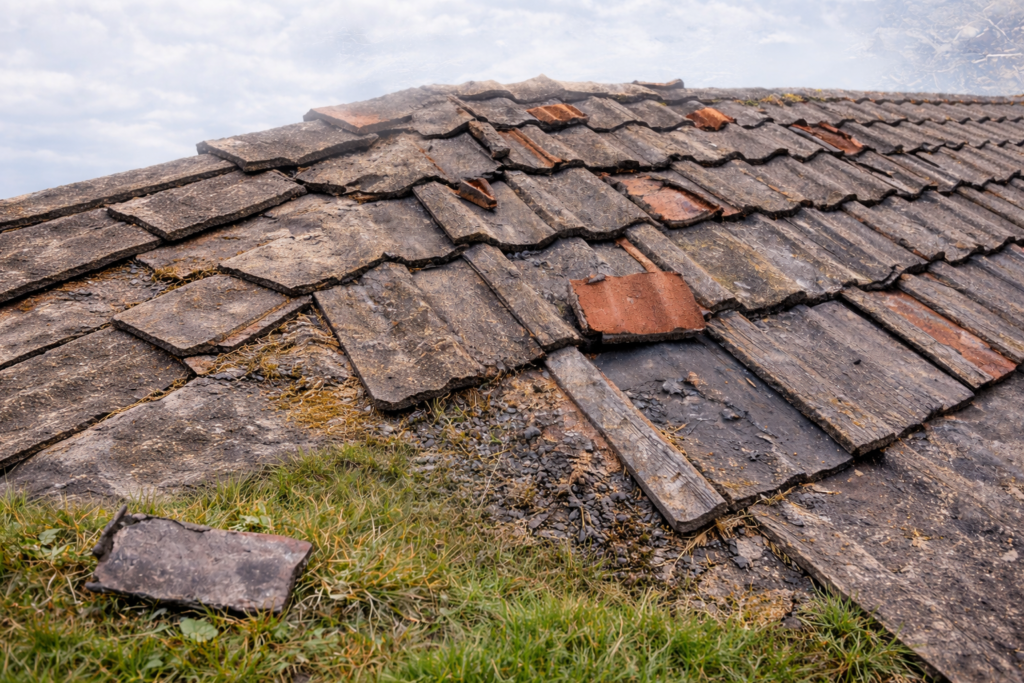
- Broken, slipped or missing tiles
- Repeated failure of previous patch repairs
A leak does not automatically mean the entire roof needs replacing. An inspection can determine whether the damage is localised or widespread.
Repair or Replace the Garage Roof?
A targeted repair may be suitable when the defect is limited and the surrounding roof remains in good condition.
Examples may include:
- Repairing a small damaged section of membrane
- Replacing individual broken tiles or slates
- Resealing an appropriate roof edge
- Repairing localised lead flashing
- Clearing a blocked outlet
- Replacing a small number of failed fixings
Replacement may provide better long-term value when damage affects several parts of the roof or when the underlying deck and supporting materials have also deteriorated.
A complete garage roof replacement may be recommended when:
- The covering has widespread splits or deterioration
- Leaks are occurring in multiple locations
- The roof deck has become soft, rotten or unstable
- The existing material is no longer secure
- Previous repairs have repeatedly failed
- The roof has inadequate drainage throughout
- The covering must be removed to complete structural repairs
Flat Garage Roof Replacement
Many attached and detached garages have flat or low-pitched roofs. Although these roofs appear level, they should have a carefully formed fall that directs rainwater towards an outlet or gutter.
A flat garage roof replacement may involve:
- Removing the existing roof covering
- Inspecting the supporting deck and joists
- Replacing damaged timber or decking
- Correcting insufficient falls where possible
- Installing the chosen waterproofing system
- Forming secure edge and wall details
- Connecting the roof to suitable drainage
The membrane, deck, insulation, trims and drainage should be treated as one complete system rather than separate components.
DB Roofing provides professional flat roofing services for garages, extensions and commercial properties across Dorset.
Pitched Garage Roof Replacement
Some garages have traditional pitched roofs finished with concrete tiles, clay tiles or slate. These roofs should be inspected for damaged coverings, deteriorated battens, torn underlay and defective ridge or verge details.
A pitched garage roof replacement may include:
- Careful removal of the existing covering
- Inspection of rafters and structural timbers
- Installation of suitable roofing underlay
- Renewal of roof battens
- Installation or reuse of suitable tiles or slates
- Renewal of ridge, hip and verge details
- Installation of appropriate lead flashing
Existing tiles or natural slates may sometimes be reused if they can be removed safely and remain in serviceable condition. Damaged pieces should be replaced with compatible materials.
Learn more about DB Roofing’s tile and slate roofing services.
Choosing a Garage Roofing System
The right roofing system depends on the garage’s construction, roof pitch, intended use and surrounding property.
Important considerations include:
- The angle and size of the roof
- The condition of the existing structure
- Whether the garage is attached or detached
- The required appearance
- Available drainage positions
- Exposure to wind and coastal weather
- Insulation and condensation requirements
- Future access and maintenance
- The weight of the proposed covering
The selected system should be appropriate for the roof rather than chosen on appearance or initial cost alone.
Check the Roof Deck and Supporting Structure
Replacing only the visible covering may not resolve the problem if water has already damaged the materials underneath.
Once the old covering is removed, the contractor should assess the accessible roof deck, joists, rafters and other supporting elements. Soft timber, visible decay, corrosion or excessive movement may require additional work before the new covering is installed.
A visibly sagging or unstable garage roof may also require assessment from a suitably qualified structural professional.
Could an Older Garage Roof Contain Asbestos?
Some older garages and outbuildings have fibre-cement roof sheets that may contain asbestos. Their appearance alone is not always enough to confirm the material.
Potential asbestos-containing materials should not be drilled, cut, broken or removed by an untrained person. The roof should be assessed before work begins so that any necessary testing, removal and disposal can be planned safely.
The Health and Safety Executive’s asbestos guidance explains where asbestos-containing materials may be found and who should work on them.
Old garage roof sheets can also be fragile. No one should walk on the roof simply because the sheets appear solid from below.
Garage Roof Drainage
Effective drainage is essential for a dependable garage roof. Water should travel towards an outlet, gutter or other suitable discharge point without remaining on the surface.
The replacement project should consider:
- The direction and angle of the roof falls
- The number and size of outlets
- Gutter capacity
- Downpipe positioning
- Connections to the existing drainage system
- The effect of nearby walls and buildings
- Access for future cleaning
Correcting drainage problems during the replacement is normally more effective than repeatedly repairing damage caused by standing water.
Insulating a Garage Roof
Insulation requirements will depend on how the garage is used. An unheated storage garage will have different requirements from a garage converted into a workshop, office or habitable room.
If insulation is installed, the complete roof build-up must control both heat loss and condensation. Simply placing insulation between timbers without considering ventilation or vapour control can create hidden moisture problems.
The specification should be agreed before construction begins, particularly when the garage forms part of the heated property.
Planning Permission and Building Regulations
A like-for-like garage roof replacement will not always require planning permission. However, permission may be needed if the work significantly changes the roof’s height, shape, materials or overall appearance.
Additional restrictions may apply when:
- The property is listed
- The garage is in a conservation area
- The roof height will increase
- The work forms part of a garage conversion
- The garage is close to a property boundary
- The replacement substantially changes the structure
Building Regulations approval may also be required when a significant proportion of the roof is being renovated or when structural and thermal elements are altered.
The Planning Portal’s re-roofing guidance provides further information about Building Regulations for roof replacement projects.
Requirements should be confirmed with the local planning authority or building control provider before work begins.
How to Prepare for a Garage Roof Replacement
Before the roofing team arrives, valuable or sensitive items should be removed or protected. Dust and small amounts of debris can enter the garage while the old covering is being removed.
Homeowners should also:
- Provide clear access to the garage
- Move vehicles away from the working area
- Discuss access with neighbouring properties if required
- Confirm how waste materials will be removed
- Identify electrical cables or equipment near the roof
- Keep children and pets away from the work area
The contractor should explain the proposed materials, drainage arrangement and any repair work identified beneath the existing covering.
Professional Garage Roofing Across Dorset
DB Roofing provides comprehensive roofing services throughout Dorset, including flat roofing, pitched roofing, tile and slate installation, leadwork, repairs and replacements.
Our team serves Bournemouth, Poole, Christchurch, Wimborne, Ferndown, Wareham and surrounding areas.
Request a Free Garage Roof Quote
If your garage roof is leaking, sagging or repeatedly requiring repairs, a professional inspection can help establish whether repair or replacement is the most suitable option.
For a professional garage roof replacement in Dorset, contact DB Roofing or call 01202 126602 to request a free quotation.