Roofing Contractor in Dorset: Your guide to Durable Roofs in a Coastal Climate
Roofing Contractor in Dorset are your first line of defence against wind, salt spray, heavy rain and strong sun. This guide explains what to look for in a Dorset roofer, which materials suit our local conditions, and how to keep your roof performing year after year.
Why Roofing Contractor in Dorset must understand coastal conditions
Dorset homes face accelerated weathering. Salt crystals and moisture work their way into joints and fixings. UV exposure dries out older membranes. Wind uplift can fatigue tiles and ridge systems. Local Roofing Contractor in Dorset specify materials and details that resist these stresses, then install them with proven fixings, correct laps and well-formed junctions.
Signs it is time to call Roofing Contractor in Dorset
Small clues often precede bigger problems. Look for slipped or cracked tiles, rust marks beneath fixings, staining on ceilings after heavy rain, moss growth on cold, shaded slopes and whistling draughts in high winds. Any of these can indicate failed flashings, blocked outlets or tired underlay. Prompt attention from experienced Roofing Contractor in Dorset prevents water ingress and protects insulation, rafters and interior finishes.
Materials that work in Dorset: pitched and flat options
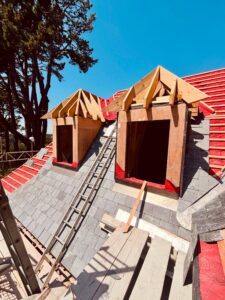
Pitched roofs remain the most common across the county. Clay and concrete tiles offer proven longevity when fixed to current standards with correct battens and clips. Natural slate gives a refined finish with excellent service life.
For guidance on profiles, colours and fixings, explore our Pitched roofing page.
Flat roofs now rival pitched roofs for reliability when detailed correctly. Modern single-ply and bituminous systems deliver robust waterproofing, especially over warm roofs with tapered insulation to remove standing water. Compare systems on our Flat roofing page.
Roofing Contractor in Dorset: maintenance checklist
Clear gutters, outlets and valleys
Re-secure slipped tiles or slates
Inspect and seal penetrations, vents and rooflights
Check ridge, hip and verge systems for movement
Refresh protective coatings where specified
For a month-by-month plan, read Seasonal roof maintenance Dorset to keep on top of routine care.
Leadwork and weathering details make or break a roof
Even premium membranes fail if junctions are weak. Skilled leadwork around chimneys, parapets and abutments is essential. Correct codes, stepped flashings into masonry, neat soakers and expansion joints create a watertight envelope that can last decades. See examples and service scope on our Leadwork services page.
Access and safety for tall or complex properties
Townhouses, churches and coastal properties with difficult access demand specialist planning. Safe systems shorten programme time and minimise disruption to neighbours and traffic. If your project involves tower access, rope teams or MEWPs, our guides on High-access roofing maintenance in Southampton outline methods we also apply across Dorset for similar conditions.
What to expect from a local survey
A professional survey documents roof coverings, fixings, underlay condition, insulation levels, ventilation paths and all junctions. You should receive a clear scope of works with itemised materials, photos and a timeline. Dorset properties often benefit from improved ventilation details at the eaves and ridge to reduce condensation risk while maintaining energy performance.
Cost, warranties and value
Prices vary with area, access, specification and detailing. Quality Roofing Contractors in Dorset will price like-for-like systems, list manufacturer warranties and provide workmanship guarantees. The best value often comes from pairing durable coverings with robust details, not from cutting corners on fixings or junctions.
Why choose Dorset Building & Roofing
Local knowledge of coastal weathering and planning context
Skilled teams across pitched, slate, tile and modern flat systems
In-house leadwork for watertight junctions
Clear reporting, tidy sites and reliable timelines
Ongoing care plans to extend service life
FAQs about Roofing Contractors in Dorset
How often should a Dorset roof be inspected?
Once each spring and autumn, plus after major storms. Combine visual checks with gutter clearing to prevent blockages.
Which roof covering lasts longest near the coast?
Natural slate and premium clay tiles perform exceptionally when fixed to current standards. On flat roofs, quality bituminous or single-ply systems with proper falls provide long service life.
Do I need improved ventilation when I re-roof?
Often yes. Modern insulation reduces heat loss but can increase condensation risk if ventilation is poor. We design eaves and ridge details to maintain airflow.
Can you repair rather than replace?
Many leaks come from localised defects. We frequently repair flashings, replace small roof sections and improve drainage before a full re-roof is needed.