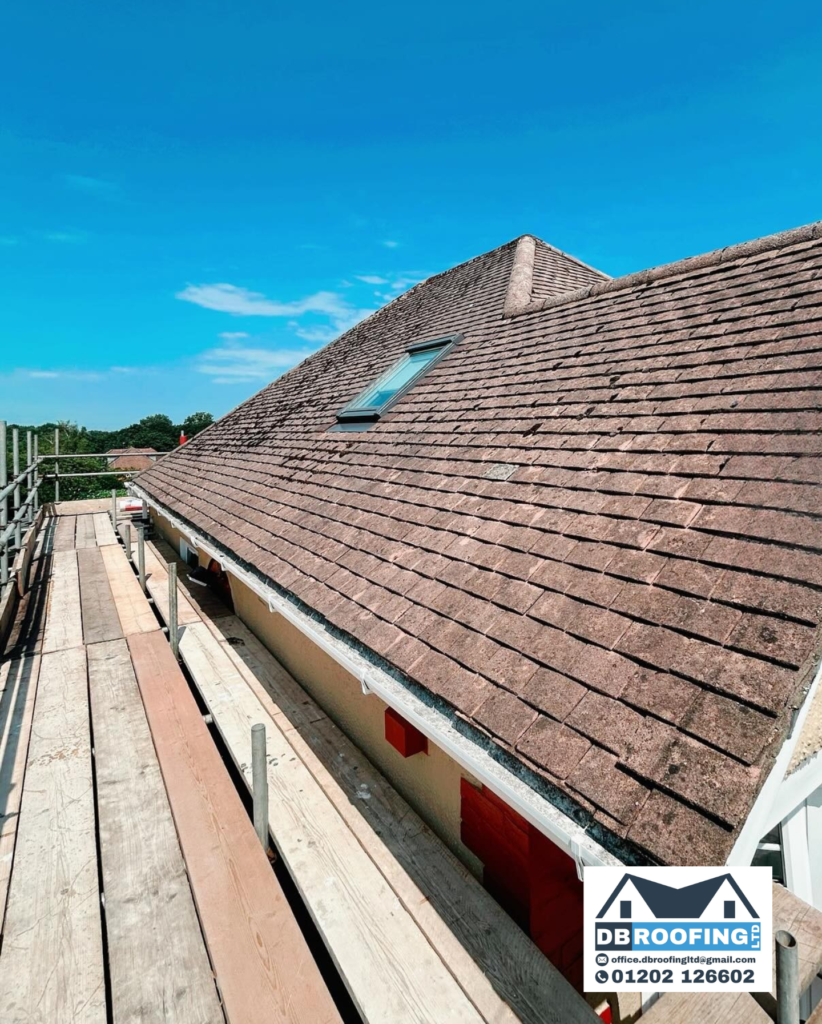
Professional roof underlay replacement in Dorset may be required when the protective membrane beneath your tiles or slates has become torn, brittle or extensively deteriorated.
Roof underlay is mostly hidden from view, but it performs an important role within a pitched roofing system. It provides secondary protection against wind-driven rain, dust and moisture that passes beneath the main roof covering.
When the underlay begins to fail, homeowners may experience recurring leaks even when the visible tiles appear to be in reasonable condition. Understanding the warning signs can help you arrange an inspection before moisture causes more extensive damage.
What Is Roof Underlay?
Roof underlay is the layer installed beneath roof tiles or slates and above the rafters. Roofing battens are positioned over the underlay and provide fixing points for the outer covering.
Older properties may have traditional bituminous roofing felt, while newer roofs often use lightweight synthetic or breathable membranes. The correct product will depend on the roof design, ventilation strategy and expected level of weather exposure.
Although tiles and slates provide the main protection against the weather, small amounts of rain or wind-blown moisture may occasionally pass beneath them. The underlay helps direct this water towards the eaves instead of allowing it to enter the loft.
What Does Roof Underlay Do?
A correctly installed roof membrane performs several functions:
- Provides secondary protection against wind-driven rain
- Helps direct moisture towards the guttering system
- Reduces the entry of dust and wind-blown debris
- Supports the overall weather resistance of the roof
- Helps protect insulation and roof timbers
- Contributes to the designed ventilation and moisture-control system
The underlay should not be considered a replacement for securely installed tiles or slates. All parts of the roof must work together to protect the property.
Signs Your Roof Underlay May Be Failing
Recurring Roof Leaks
A leak that returns after individual tiles have been replaced could indicate damage beneath the roof covering. Water may be entering through another area and travelling across torn or sagging underlay before reaching the loft.
Torn or Hanging Roofing Felt
Sections of underlay that hang down inside the loft may have torn away from the fixings. This can leave gaps where moisture, dust and debris can enter.
Brittle or Crumbling Material
Older bituminous felt can become dry and brittle over time. It may crack when touched or break around the fixings and overlaps.
Water Staining Inside the Loft
Dark marks on rafters, battens or the underside of the membrane may indicate previous or ongoing moisture entry. Staining should be professionally investigated even if the area currently feels dry.
Visible Holes or Splits
Damage can occur around nail holes, roof penetrations, previous repairs or areas affected by pests. Larger splits may prevent the membrane from directing moisture safely towards the eaves.
Damp or Damaged Insulation
Wet insulation can indicate a roofing defect, condensation problem or plumbing leak. The source should be identified before the insulation is replaced.
Daylight Visible Through Damaged Areas
Small amounts of light between tiles do not always mean there is a serious problem. However, daylight visible through torn underlay, missing coverings or obvious holes should be investigated.
What Causes Roofing Felt and Underlay to Fail?
Roof membranes can deteriorate for several reasons:
- Age and long-term weather exposure
- Incorrect installation or insufficient overlaps
- Damage caused during previous roofing work
- Movement of roof tiles, slates or battens
- Leaks around chimneys, valleys or roof windows
- Punctures caused by pests
- Excessive condensation inside the loft
- Prolonged exposure before the outer covering was installed
- Unsupported sections sagging between rafters
The surrounding tiles, battens, flashings and ventilation should be assessed alongside the underlay. Replacing one damaged section will not solve a leak caused by defective leadwork or broken roof coverings.
Can Damaged Roof Underlay Be Repaired?
Localised repairs may be possible when the damage is limited and the remainder of the membrane remains in good condition.
The roofer may need to lift tiles or slates around the affected area before installing a suitable repair. The new membrane must overlap correctly so water continues to travel down the roof rather than beneath the repaired section.
Patch repairs may be unsuitable when:
- The underlay is brittle throughout the roof
- Several areas are torn or sagging
- Fixing points have extensively deteriorated
- The roof has repeated leaks in different places
- Battens also require replacement
- The existing material is no longer providing dependable protection
In these circumstances, removing the tiles and renewing the underlay and battens may offer a more reliable solution.
Does Replacing Underlay Mean Replacing the Entire Roof?
Accessing the underlay normally requires the tiles or slates above it to be removed. However, this does not always mean that every roof covering must be discarded.
Serviceable tiles or natural slates may sometimes be carefully removed, stored and reused. Damaged or unsuitable pieces can then be replaced before the roof is re-covered.
The final specification will depend on:
- The condition of the existing covering
- The availability of matching materials
- The strength of the battens and structure
- The roof’s ventilation and insulation
- The cost of careful removal and reuse
- Any Building Regulations requirements
Roof Underlay and Ventilation
Different roofing membranes have different performance characteristics. Some allow water vapour to pass through more readily, while others require a separate ventilation arrangement.
Installing a breathable membrane does not mean every roof ventilation issue can be ignored. The complete roof build-up, insulation and indoor moisture levels must be considered.
The NFRC’s pitched roof underlay guidance covers performance, application and condensation control considerations for roofing membranes.
Building Regulations for Underlay Replacement
Small repairs will not normally be treated the same as a complete re-roofing project. However, Building Regulations approval may be required when a substantial part of the roof is being renovated or replaced.
The Planning Portal’s re-roofing guidance explains that larger roofing projects may also require improvements to insulation and other thermal elements.
The requirements should be checked before work begins, particularly if the roof covering, insulation or construction method will change.
Professional Roof Underlay Replacement in Dorset
DB Roofing provides professional pitched roofing services throughout Dorset. Our team can inspect the outer covering, underlay, battens, ventilation and visible structure to identify the cause of a leak.
We also undertake tile and slate roofing, including repairs, replacements and complete installations.
Request a Free Roofing Quote
If your roofing felt is torn, brittle or allowing water into the loft, arranging an inspection can help prevent further damage.
For professional roof underlay replacement in Dorset, contact DB Roofing or call 01202 126602. We cover Bournemouth, Poole, Christchurch, Wimborne, Ferndown and surrounding areas.