Choosing Flat Roofing in Dorset is not only about the material. Longevity usually comes down to correct falls (drainage), strong detailing at edges and outlets, and a roof build-up that manages moisture properly.
If you’ve had recurring leaks, ponding water, bubbling, or cracking, it’s rarely “just bad luck”. It’s often a fixable issue with design detail, installation quality, or maintenance.
For an overview of roofing services.
Flat Roofing in Dorset: the common problems and the real causes
Ponding water (standing water after rain)
Some minor ponding can happen, but persistent standing water can shorten many systems’ lifespans. Causes include poor fall, blocked outlets, sagging decking, or poor outlet placement.
Cracks, splits, and edge failures
Edges, trims, and upstands take the brunt of weather. If detailing is rushed, water finds the weak point first.
Blisters or bubbles in the surface
Blistering can indicate trapped moisture, bonding issues, or heat-related movement. It may not leak today, but it often becomes a future failure point.
If your flat roof is already showing symptoms, this page helps you understand options and next steps.
Flat Roofing in Dorset: EPDM vs GRP vs felt in plain English
There isn’t one “best” flat roof for every Dorset property. The best choice depends on your roof size, usage, edge detailing, drainage design, and budget.
EPDM rubber roofing
Often chosen for flexibility and clean finish. Installed correctly, it performs well and can cope with movement.
GRP fibreglass roofing
Can give a neat finish when conditions and detailing are right. Preparation and curing matter a lot for long-term performance.
Torch-on felt systems
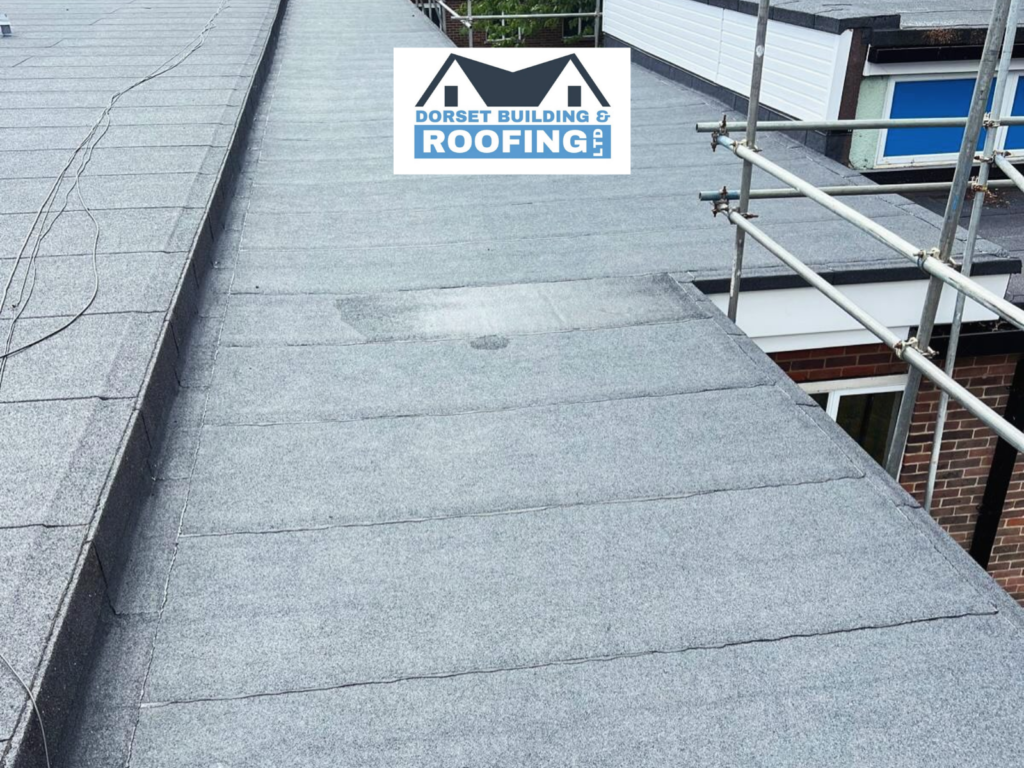
Modern multi-layer felt systems can be durable. Weakness usually comes from seams, outlets, and upstands when shortcuts are taken.
Flat Roofing in Dorset: warm roof vs cold roof and why it matters
Many flat roof issues come from condensation rather than rain ingress, especially where insulation and ventilation are not designed properly. Warm roof build-ups place insulation above the deck and can reduce condensation risk in many scenarios. Cold roof build-ups keep insulation below the deck and rely more on correct ventilation.
For general UK property guidance (including when permissions may apply), Planning Portal is a useful reference.
Maintenance that extends the life of flat roofs
A few simple habits can protect your Flat Roofing in Dorset investment:
Clear outlets after autumn leaf fall, check edges and trims after storms, and don’t ignore small cracks. If access is difficult, planned inspections help reduce emergency costs. This high-access guide is a good reference.
For year-round roof care, use this seasonal checklist.
When a pitched roof might be the better option
Some extensions work better with pitched roofs depending on structure and drainage goals. If you’re comparing systems, this page is helpful.
Safety note about DIY checks
Flat roofs can be deceptively dangerous, especially near edges and skylights. Before attempting access, read HSE guidance on working at height.